
Criminal Cases in Pitkin County Courts
Pitkin Combined Court operates County Court and District Court from the county courthouse in Aspen. District Court hears felony prosecutions. County Court handles misdemeanors, traffic matters, and the preliminary stages of some felony cases. This split can confuse a searcher because a felony arrest may first appear on a County Court calendar before a District Court case number opens. Colorado case numbers commonly combine the filing year, a case-type code such as CR, M, or T, and a sequence number. Confirm the court and full number before ordering a document.
The clerk is custodian of the court case file. Aspen, Basalt, and Snowmass Village municipal courts separately hold ordinance cases and municipal warrants. A city police arrest does not by itself establish which court has the prosecution. The filed charge controls. State-law charges from Pitkin County generally route to Combined Court, while a city-code count can remain with the relevant municipal clerk.
Basalt requires special care. The town spans Pitkin and Eagle counties, so a state case may enter the Ninth Judicial District or the Fifth Judicial District based on the incident location. A Basalt mailing address does not settle that question. Snowmass Village tickets labeled MC SV or MTC point toward the town’s municipal process, while a Colorado state-law ticket routes to Pitkin Combined Court. These local distinctions explain why a county-only name search can miss a valid municipal or neighboring-district file.
Pitkin County Combined Court
The Combined Court clerk works at 506 E. Main St., Aspen, CO 81611, beside the sheriff and jail campus. Call 970-925-7635 before a visit to confirm counter hours, closures, accessibility arrangements, interpreter needs, and which division holds a file. Courthouse security screening applies, and unauthorized recording of Colorado Judicial Branch proceedings is prohibited. The Ninth Judicial District warns that recording a WebEx proceeding may lead to contempt sanctions.
Pitkin Combined Court Clerk
506 E. Main St.
Aspen, CO 81611
970-925-7635
County and District Court case numbers, registers of actions, pleadings, orders, and copy requests.
Search Pitkin County Case Records
Use the free Judicial Branch docket route when the court location and hearing date are known. CoCourts offers a fee-based statewide name index and can narrow by Pitkin County, date of birth, or case number. Neither route replaces the clerk. Gather a full legal name, date of birth, approximate filing or arrest year, arresting agency, and any number printed on a citation, bond paper, or jail receipt.
- Open the Colorado Judicial Branch court docket search, then choose the Pitkin location and a useful date or range.
- When a name index is needed, use CoCourts with the person’s name, date of birth, county, or known case number.
- Separate County Court criminal, District Court criminal, traffic, and municipal matters. The same event may create more than one number.
- Read the event sequence and note later entries that amend charges, recall warrants, dismiss counts, or set sentencing.
- Call the Combined Court clerk for the register of actions and any ordinary, certified, or exemplified copies required.
| Field Label | Type | Required | Notes |
|---|---|---|---|
| Last name | Text | Route dependent | Use the full legal spelling and check aliases only when supported. |
| First name | Text | Route dependent | Add the first name to reduce common-name matches. |
| Case number | Text | No | The strongest key when the complete Colorado number is known. |
| Date of birth | Date | No | Available through CoCourts to distinguish people with similar names. |
| County and date | Select/date | Docket route | Choose Pitkin and the expected hearing date or range. |
Pitkin Court Docket or CoCourts
These official routes answer different questions. The free docket is best for a known date and scheduled hearing. CoCourts is useful when the name must be checked across a broader index, though registration and payment can gate detail. Documents may still require clerk review and a copy charge. A blank result should prompt a check of spelling, date, court level, and municipal jurisdiction rather than a claim that no case exists.
The successful manifest capture comes from the official-linked CoCourts search.
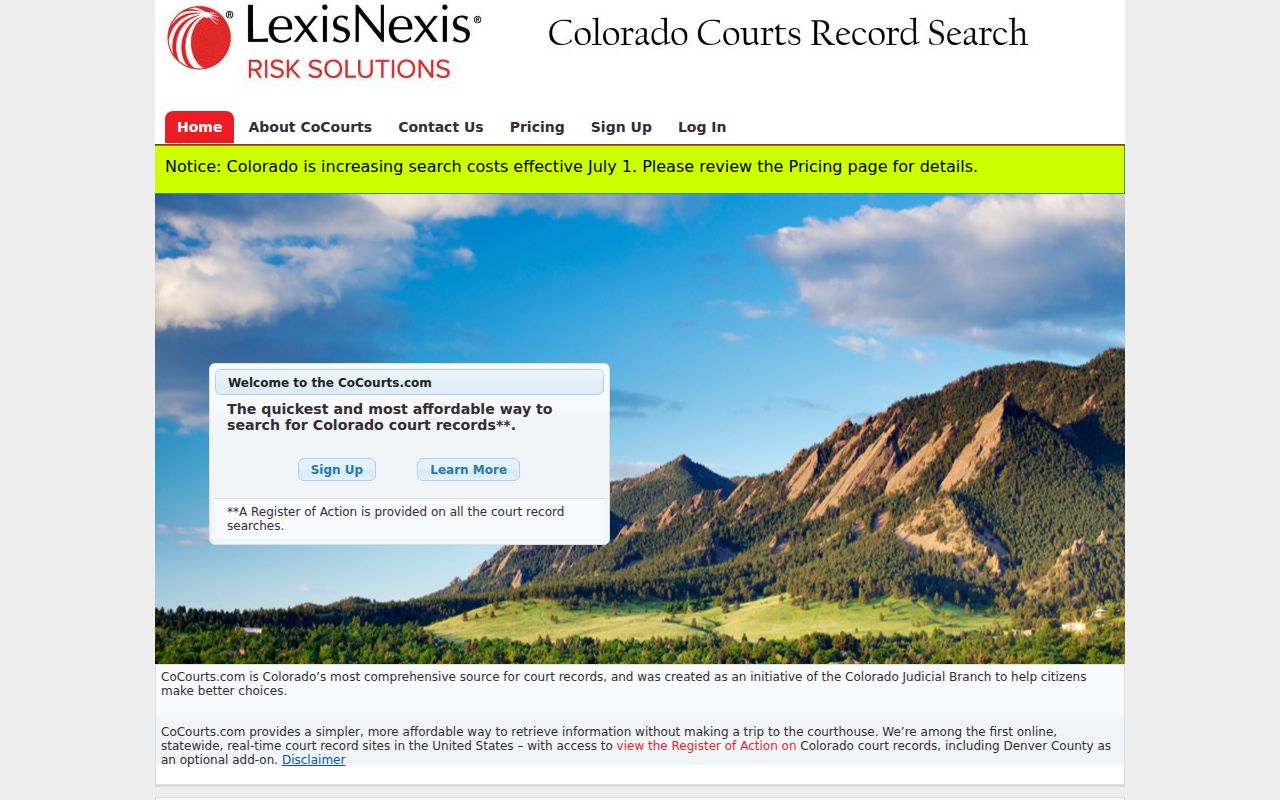
Its name, birth-date, county, and case-number controls show why accurate identifiers matter, but the Pitkin clerk remains the source for the underlying orders and certified disposition.
Free dockets also have a narrower purpose. They organize scheduled court activity by location and date. A person whose last hearing occurred months ago may not be visible in the selected calendar range even though the clerk still holds a file. CoCourts can provide broader index detail, but payment for an index result does not buy every pleading or certify the outcome. Save the complete case number from either route, then tell the clerk which document is needed.
Pitkin County Case File Contents
A case file records the prosecution as filed and changed. The register of actions is the chronological index. The complaint or information states the filed counts, while motions and orders show disputes and rulings. A judgment and sentencing order give more reliable outcome detail than a short docket label. Public register entries do not guarantee that every linked document is available online.
Financial entries may show fines, fees, restitution, or a balance when public. Attorney appearances identify counsel at a point in time. Hearing entries can name the courtroom, judicial officer, and event type. None of those fields should be read alone. A dismissed count can remain in the chronological record beside the later dismissal, and an amended charge can leave both old and new descriptions in the sequence. The final order supplies the key context.
| Case Number & Court | Identifies filing year, case type, sequence, county, division, and current status. |
|---|---|
| Charging Document | Lists each filed count, statute, offense class, and later amendment or dismissal. |
| Docket Entries | Chronicles filings, advisements, pleas, motions, warrants, reviews, and orders. |
| Hearing Dates | Shows date, time, courtroom or division, judicial officer, and event type when public. |
| Disposition & Judgment | States whether counts ended by plea, verdict, dismissal, deferred outcome, or another result. |
| Sentence & Conditions | May state custody, probation, fines, fees, restitution, and later compliance proceedings. |
Read Pitkin County Docket Events
Short event labels can be mistaken for final results. Read forward through the register. An issued warrant may later be quashed, recalled, or served. Sentencing may occur well after a plea or verdict. When an entry is unclear, ask for the underlying order instead of assigning it a broader meaning.
- Advisement
- An early appearance concerning rights, charges, and often bond, not a finding of guilt.
- Preliminary hearing
- A probable-cause stage in eligible felony procedure, not the trial.
- Arraignment
- The stage at which a plea is entered.
- Disposition
- The outcome of a count, including plea, verdict, dismissal, or deferred result.
- Review
- A later hearing that may concern compliance and does not automatically signal a new charge.
Pitkin County Criminal Case Stages
The arrest and booking records begin outside the clerk’s file. A prosecutor’s filing creates the court case. An advisement or bond hearing may come first, and an eligible felony can pass through a County Court preliminary stage before District Court arraignment. Pretrial motions and negotiations may change the filed counts. A plea or trial leads to disposition, followed by sentencing when required. No single timetable fits every Pitkin County matter because custody, warrants, court calendars, and case complexity differ.
Case flow: Charges Filed › Arraignment › Pretrial › Plea or Trial › Disposition › Sentencing
Pitkin Criminal Case Dispositions
PCSO Records can release Sheriff-created arrest and incident material, but it does not supply court dispositions. A jail offense is also a custody snapshot. Prosecutors may decline charges, amend them, or file a different count. To learn the result, match the booking to the court case and obtain the judgment or dismissal order from the clerk.
This division of custody matters after an Aspen Police arrest as well. Aspen Police holds its narrative, the Pitkin jail holds the booking entry, and Combined Court or a municipal clerk holds the filed case. The broader Pitkin County arrest history resource explains those agency-specific request paths.
CBI’s criminal history is a fourth layer. It can associate fingerprint-supported arrest cycles with dispositions reported back by courts, but it does not contain the full motion practice, affidavits, exhibits, or hearing record. When CBI shows a missing or wrong disposition, obtain a certified disposition from the court first. That document supports a correction request to the state repository and preserves the exact case number and outcome.
Pitkin Municipal Case Routing
Municipal court records stay outside the Combined Court file when the allegation is a city charter, code, or ordinance matter. Aspen Municipal Court posts a docket and holds its own case records. Basalt Municipal Court handles town ordinance matters even though state cases can split between two judicial districts. Snowmass Village uses local ticket labels that help identify its municipal route.
When a Combined Court search is blank, read the citation and call the city clerk with the name, ticket or case number, and court date. A municipal warrant also belongs with the issuing municipal court. This is a routing check, not a reason to assume that the arrest, citation, or case did not occur.
Pitkin County Case Access
Colorado court files are controlled by the Judicial Branch, not by the county’s general CORA request route. Public registers may show the court, parties, charges, hearings, and outcome, while document images can require clerk review or purchase. Social Security numbers, protected addresses, juvenile information, victim details, and sealed content are withheld or redacted. A public docket is an index, not a promise that each pleading is open.
If a Pitkin County case is missing, check the court level, municipal route, filing year, and spelling. Then call the clerk with the best identifiers. A sealed case may no longer appear publicly. The clerk can explain access and copy mechanics but cannot choose a remedy or interpret what a disposition means. For an ordinary, certified, or exemplified copy, state the product needed and ask about current fees and remote delivery.
Colorado adult criminal-record relief is generally called sealing, not expungement. Juvenile expungement uses a different statutory framework. A sealing order can restrict public access to an eligible file, and protected juvenile or victim information may be unavailable even in an otherwise public case. Do not assume that an online omission proves the file never existed. Ask the clerk whether access is restricted without seeking protected details the office cannot release.